BULK & WHOLESALE
How to Spot High-Quality Peptides
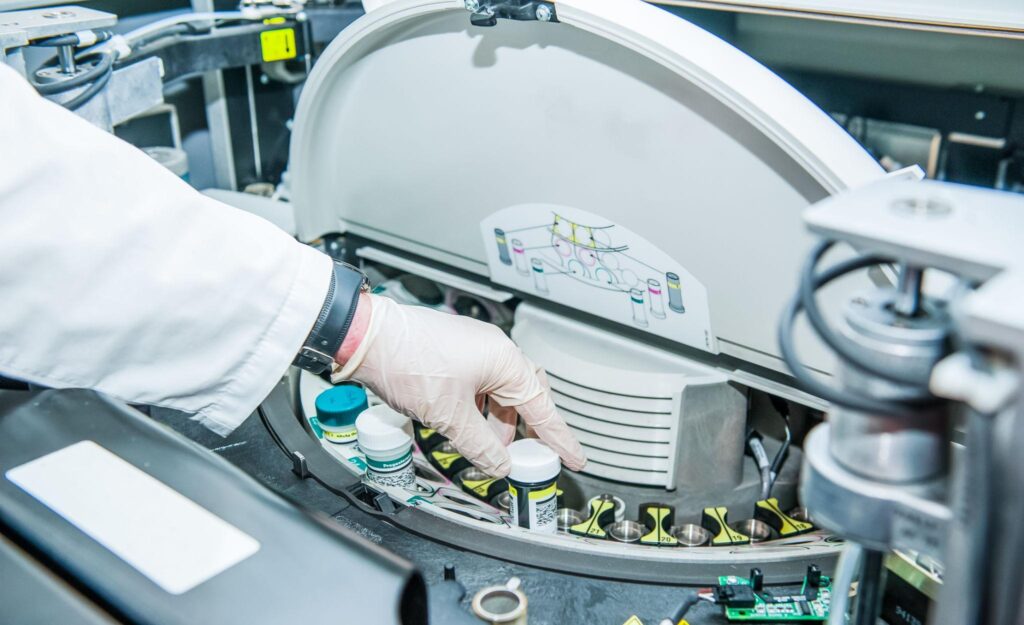
Spotting high-quality research compounds in an increasingly crowded market requires a clinical eye for detail. To protect your data integrity, use these “Elite” criteria to evaluate any product.
1. Purity Threshold: The 99% Rule
In 2026, the industry standard for elite-grade research is a minimum of 99.0% purity.
-
HPLC Verification: High-Performance Liquid Chromatography (HPLC) is the only acceptable method for determining purity.
-
Impurity Profiles: High-quality peptides should have negligible amounts of residual solvents, TFA (trifluoroacetic acid), or truncated sequences.
-
Consistency: Products like Thymalin 10mg should show consistent purity across multiple batch numbers.
2. Physical Characteristics of the “Cake”
The visual appearance of a lyophilized peptide can reveal much about its quality.
-
The Lyophilized Cake: High-quality peptides arrive as a solid, uniform, and porous “cake” or crisp white powder.
-
What to Avoid: If the powder appears “shrunken,” discolored (yellowish), or sticky (melted), it indicates moisture infiltration or heat damage during the freeze-drying process.
-
Reconstitution Clarity: Once Bacteriostatic Water is added, the solution should become completely clear and colorless within minutes without persistent particulates.
3. Verification of Identity (Mass Spectrometry)
Purity alone is not enough; you must verify that the substance is actually the peptide you ordered.
-
Mass Spec (MS): Every elite supplier should provide a Mass Spectrometry report that shows a peak corresponding to the specific molecular weight of the peptide.
-
Sequence Accuracy: For complex items like the SIL 50mg + TAD 20mg Blend, MS ensures that both compounds are present in the exact ratios
4. Manufacturing Standards: GMP-Certified Facilities
The environment in which the peptide is synthesized determines its baseline safety.
-
GMP Compliance: High-quality peptides are manufactured in Good Manufacturing Practice (GMP) certified facilities.
-
Sterility: This ensures that the vials are filled in a sterile environment, preventing bacterial contamination that could compromise research results.
Quality Checklist: Elite vs. Substandard
| Quality Indicator | Elite Standard (Royal Peptides) | Substandard Warning Signs |
| Purity Level | $ge 99%$ | “Lab Tested” (no percentage) |
| Documentation | Public HPLC/MS Reports | Reports available “upon request” |
| Appearance | Solid, white lyophilized cake | Loose, crystalline, or wet-looking |
| Solubility | Dissolves clear instantly | Cloudy or remains gritty |
Elite Pro-Tip: The Lot-Number Match
Always check that the Lot Number printed on your vial matches the Lot Number on the COA (Certificate of Analysis). If the numbers do not align, the quality of that specific vial cannot be verified by that documentation.
